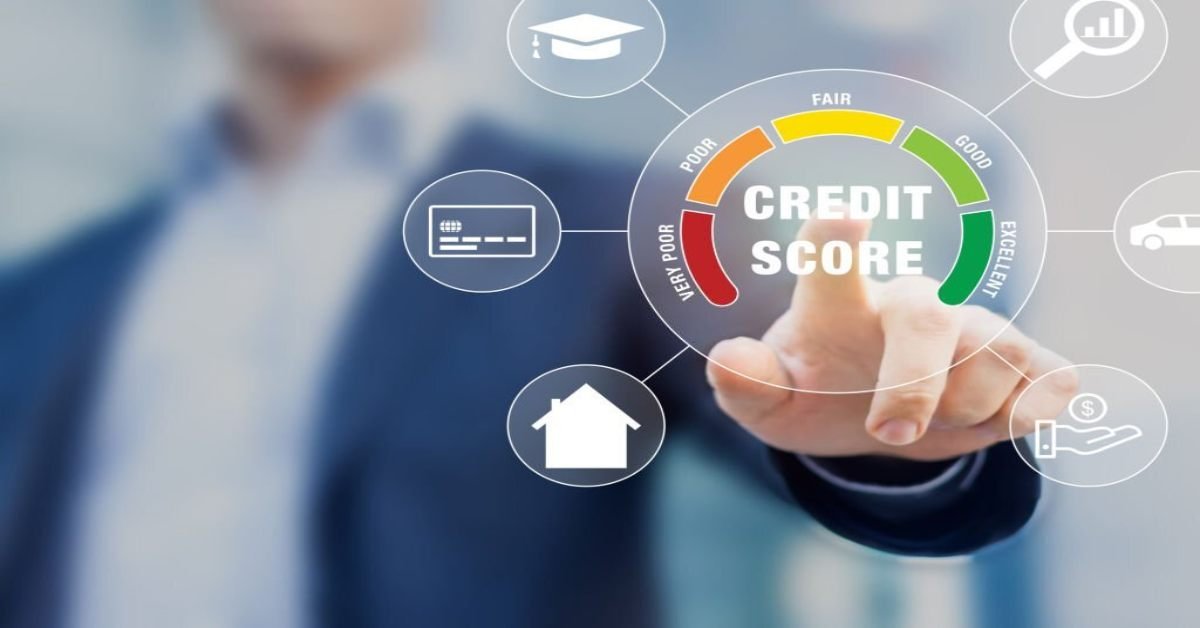
CIBIL™ is one of the prominent credit bureaus in India that collects data about a person’s credit score.
It is a very useful platform for individuals or businesses that want to take loans. CIBIL™ Score is largely sought by lenders to decide on a loan application.
Your CIBIL™ Score is a 3-digit number, ranging from 300 – 900, indicating a person’s creditworthiness.
It is calculated based on the person’s credit history, repayment history, and other factors. A CIBIL™ Score of 700 is considered to be a good score, and gets you the best loans and credit cards in the market.
What Is A CIBIL™ Login?
CIBIL™ Login is your registered login access to use the CIBIL™ portal. You can log in to check your CIBIL™ score and access your credit report.
Both individuals and companies can register with CIBIL™ to access their credit report.
Registering on the CIBIL™ platform is pretty simple. You just need to enter your name, email address, phone number and PAN number to create an account on the CIBIL™ platform and use its various features.
Let us look at the registration process for both companies and individuals on the CIBIL™ platform.
Registration Process For Companies
Companies are given a ‘CIBIL™ Rank’ instead of ‘CIBIL™ Score’. This reflects a company’s relative position among its peers.
A higher CIBIL™ rank indicates better creditworthiness.
A ‘CIBIL™ Rank’ indicates a company’s ‘Creditworthiness’ on a scale of 1-10. It is primarily used to assess the riskiness of a company’s financial statements and also to determine the credit worthiness of an individual.
It is calculated based on a company’s financials, repayment history, and other factors.
As a company, you can get a CIBIL™ Rank by submitting your KYC documents.
Here is the step by step process to get your CIBIL™ Rank.
Step 1: Go to the official CIBIL™ website and navigate to the section titled ‘Monitor Your Company’s Credit Health with CIBIL™ Rank.’ Step 2: Click ‘Get Started’.
Step 3: Choose an appropriate subscription plan.
Step 4: Provide your GSTIN or you can choose to continue without it.
Step 5: Enter the company information and complete the form; if you did not enter your GSTIN information, proceed to
Step 6: Make the payment and upload the required documents.
What Are The Documents Required To Get Your CIBIL™ Rank?
Proprietary Businesses:
• Proof of address (utility bills, passbooks, lease or sale agreement, account statement) (PAN card, driving license, passport)
For Partnership Firms:
• The firm’s PAN card
• Address verification (Utility bills, passbooks, lease or sale agreement, account statement)
• Identification of the partner submitting the request (PAN card, passport, driving license)
• Complete list of authorized signatories and specimen signatures
• Registration Certificate or a copy of the Partnership Deed
For Public and Private Limited Liability Companies:
• Company PAN Card
• Address proof (utility bills, passbooks, lease or sale agreement, account statement)
• Authorized signatory ID proof (PAN card, passport, driving license)
• Complete list of authorized signatories and their specimen signatures
• Board Resolution Copies
How To Register As An Individual On The CIBIL™ Website?
Individuals can either choose between a yearly free CIBIL™ score check or an unlimited access plan by paying a nominal subscription fee.
Whichever option you choose, registering on the CIBIL™ website is essential. To register as an individual on the CIBIL™ platform, follow these simple steps:
Step 1: Go to the CIBIL™ website and click on the ‘Get Your CIBIL™ Score’ button.
Step 2: Select an appropriate subscription plan and click ‘Get Started.’
Step 3: Complete the online form and click ‘Accept & Continue.’
Step 4: Verify your identity and pay to complete the registration process.
Upon successful registration, you can login to the CIBIL™ website and check your CIBIL™ Score.
What are the documents required to register on the CIBIL™ website as an individual?
To successfully register on the CIBIL™ website, you must submit both your ID and your residential proof.
Accepted ID Proof documents –
- Driving license
- Voter ID
- Aadhaar Card
- Passport
For address proof, you can submit –
- Utility bills
- Bank account statements
What Are The Benefits Of Registering On The CIBIL™ Website?
For individuals, CIBIL™ Score certification helps build a strong credit history, which is important for personal finance and improving a company’s overall financial health.
For businesses, CIBIL™ Rank certification helps companies build a strong credit history, which makes them eligible for better credit offers when they apply for a loan, and helps them gain access to credit lines more readily.
How Does CIBIL™ Score Affect Your Ability To Get Loans And Credit?
CIBIL™ Score is an important determinant of financial access. The higher your score, the more likely you are to be approved for a loan or credit.
CIBIL™ measures the creditworthiness of businesses by looking at historical payment records. It also uses information about a company’s industry, location, and size to come up with an overall CIBIL™ Score. Higher CIBIL™ score also gets you a higher loan amount and lower interest rates.
Can I Get A Loan Inspite Of A Low CIBIL™ Score?
A low credit score indicates to the lender that you are a risk. A high credit score indicates that the borrower will pay on time.
Your credit score is affected by how well you’ve repaid previous loans, whether you’ve defaulted or pre-paid any loans, the types of loans you’ve taken, and how much of your income goes toward loan repayment.
So, while you may be able to find some lenders willing to lend you money, you should expect to pay a high interest rate if you have a bad credit score and are in desperate need of a loan. These lenders charge exorbitant interest rates ranging from 30% to 40% per year.
Conclusion
Despite the numerous lists of “eligibility standards” for loans and credit cards that we hear about, the most important factor in determining your eligibility is your “credit score.”
Although a low credit score indicates a borrower’s poor creditworthiness and makes obtaining a loan difficult, there are some loan options available despite a low credit score.
While these steps will not immediately improve your credit score, they will have a significant impact. You’ll need patience, determination, and self-control to get a good credit score.